Invisible Braces vs. Metal Braces: A Complete Guide for 2026
Orthodontic treatment has never been more accessible or more sophisticated. In 2026, patients seeking straighter teeth face a choice that simply did not exist a generation ago: traditional metal braces or clear aligners (often called invisible braces or, generically, "Invisalign-style" aligners). Both can deliver beautiful, lasting results. But they work differently, suit different cases, carry different price tags, and create very different day-to-day experiences. This guide walks you through everything you need to know to make the right decision for your teeth, your lifestyle, and your budget.
What Are Clear Aligners?
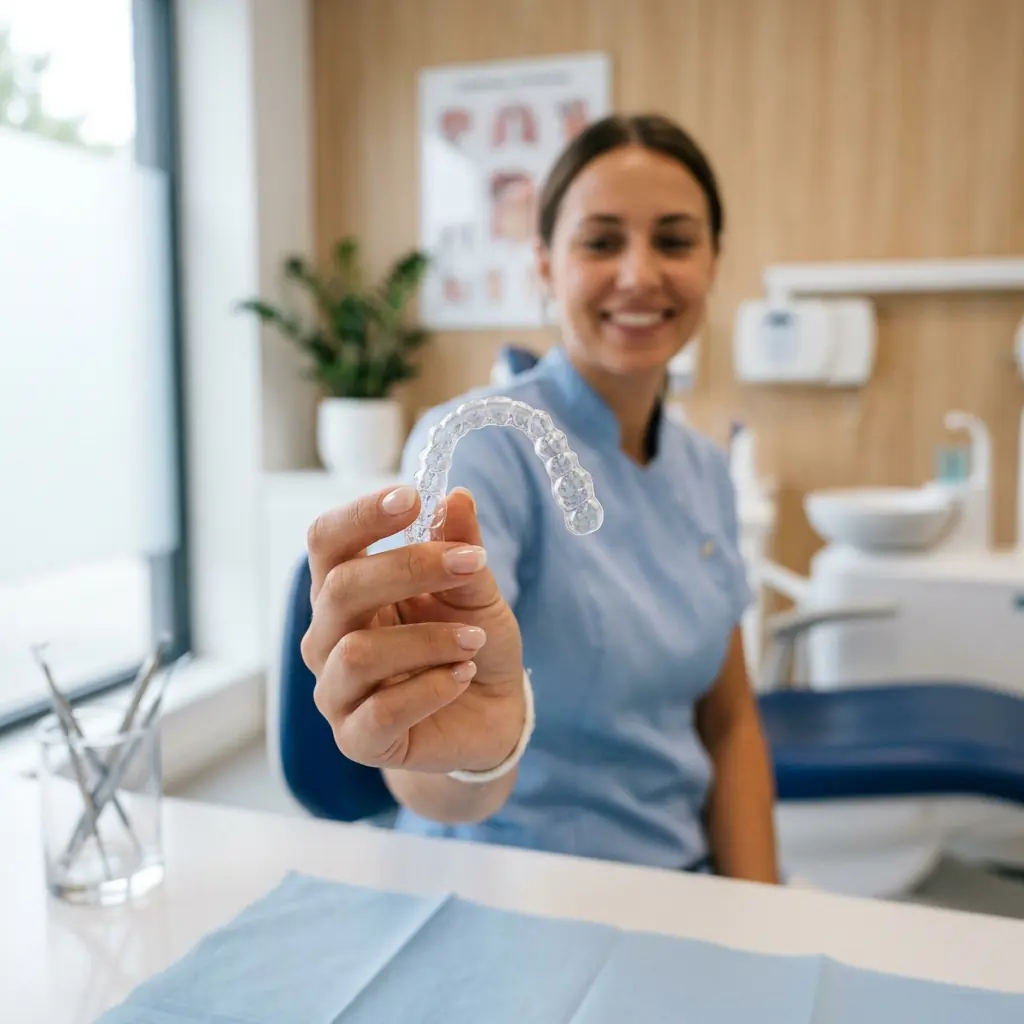
Clear aligners are a series of custom-made, transparent plastic trays that fit snugly over your teeth. Each tray is slightly different from the last, applying controlled, incremental pressure to move your teeth in precise, pre-planned directions. You typically wear each set of trays for 1-2 weeks before progressing to the next set in the series.
The treatment is planned using 3D digital scanning and computer software, which maps the entire tooth movement sequence from your current position to the desired final result before a single tray is fabricated. This gives both clinician and patient the ability to preview the expected outcome before treatment begins.
The most recognised brand globally is Invisalign, but numerous high-quality alternatives exist — including Indian and international brands such as ClearPath, Toothsi, Angel Aligners, and others. The brand matters less than the clinical expertise of the dentist or orthodontist designing and overseeing the treatment.
What Are Traditional Metal Braces?
Traditional metal braces consist of stainless steel brackets bonded directly to the front surface of each tooth, connected by a thin metal archwire. The wire is secured to the brackets using small elastic ties (or self-ligating brackets that grip the wire mechanically). The orthodontist adjusts the wire at regular appointments — typically every 4-6 weeks — progressively tightening it and changing its shape to guide teeth into their correct positions.
Modern metal braces are considerably more refined than their predecessors: smaller, smoother brackets with less bulk and less discomfort. For complex orthodontic cases, they remain the gold standard — the most powerful and predictable tooth-moving tool available.
How Each Works Mechanically
Both systems work on the same fundamental biological principle: sustained, light pressure on a tooth causes the bone around the tooth's root to remodel. Bone dissolves on the pressure side and new bone deposits on the tension side, allowing the tooth to shift. The difference is in how that pressure is delivered.
Metal braces apply continuous force through the archwire, which acts like a memory-shape spring, pulling misaligned teeth towards its pre-set form. The bracket-and-wire system gives the orthodontist precise, three-dimensional control over every movement — tilting, rotating, intruding, and extruding each tooth independently.
Clear aligners apply pressure primarily through the plastic tray itself, which is fabricated in a slightly different position than your current teeth, so wearing it creates elastic tension that nudges teeth in the desired direction. Small tooth-coloured "attachments" (tiny buttons bonded to teeth) are often added to improve the aligner's grip and enable more complex movements. Aligners are generally excellent at tipping teeth and very good at expansion, but historically less reliable than braces for complex rotations, large vertical movements, and skeletal problems.
Effectiveness: Which Cases Each Handles Best
Clear Aligners Are Excellent For:
- Mild to moderate crowding and spacing
- Minor bite corrections (mild overbite, underbite, crossbite)
- Relapse cases (teeth that have shifted after previous orthodontic treatment)
- Arch expansion for crowding
- Adult patients with fully developed jaws
- Cases where aesthetics during treatment are a priority
Metal Braces Are Better For:
- Severe crowding or complex rotations
- Large overbite, underbite, or open bite corrections
- Teeth that need significant intrusion or extrusion (vertical movement)
- Cases involving jaw surgery (orthognathic surgery)
- Younger patients whose compliance with removable aligners is unpredictable
- Highly complex multi-tooth movement sequences
It is important to note that the gap between what aligners and braces can achieve has narrowed dramatically over the past decade. Many cases that previously required braces can now be managed effectively with aligners in experienced hands. The reverse is also true — not every case marketed as "aligner-suitable" actually is. This is why a proper clinical assessment by a qualified dentist or orthodontist is essential before committing to either option.
Comfort and Lifestyle Impact
Clear Aligners
Most patients find aligners more comfortable than braces. There are no metal wires to poke the inside of your cheeks and no brackets to loosen mid-meal. When you switch to a new set of trays, there is typically mild pressure and slight soreness for 24-48 hours — less acute than after a braces adjustment appointment. Speech can be slightly affected initially (a mild lisp) but most patients adapt within days.
The lifestyle advantage of aligners is significant: they are fully removable for eating and drinking, which means zero dietary restrictions. You can eat anything you like, clean your trays and teeth normally, and reinsert. For social and professional occasions, the aesthetic advantage is obvious — they are nearly invisible.
However, this removability is also the system's main weakness: it depends entirely on patient compliance. Aligners must be worn for 20-22 hours per day to be effective. Patients who frequently remove them, forget to reinsert them, or are inconsistent will see delayed results or treatment failure. This is a genuine discipline requirement that not everyone can consistently maintain.
Metal Braces
Braces have a short adjustment period — the first few days after fitting and after each tightening appointment can involve soreness that is managed with over-the-counter pain relief. The brackets and wire can occasionally irritate the cheeks and lips, particularly early in treatment; orthodontic wax helps greatly. Speech is rarely affected beyond a brief adjustment period.
The dietary restrictions are a genuine inconvenience: hard, crunchy, or sticky foods (sugarcane, hard biscuits, nuts, toffee, raw carrots) can break brackets or bend wires and must be avoided. Oral hygiene becomes more demanding — brackets create plaque retention sites that require extra care with flossing and interdental brushes. Compliance is not a factor, however, because braces cannot be removed: they work continuously, 24 hours a day.
Cost Comparison in India (2026)
Cost is one of the most significant decision factors for Indian patients, and the difference between options is substantial:
| Treatment Type | Approximate Cost (INR) | Notes |
|---|---|---|
| Metal Braces | Budget-friendly / Low | Standard stainless steel; includes all appointments |
| Ceramic Braces | Moderate | Tooth-coloured brackets; more aesthetic than metal |
| Self-Ligating Braces | Moderate | No elastic ties; potentially faster treatment |
| Clear Aligners (Indian brands) | Moderate to Premium | ClearPath, Toothsi, and similar; mild to moderate cases |
| Clear Aligners (Premium international) | Premium / High | Invisalign and similar premium brands |
| Lingual Braces | Premium / High | Braces fixed to the back (tongue side) of teeth — invisible from front |
Note: These are indicative ranges. Actual cost depends on case complexity, treatment duration, and clinic location. Always request a detailed treatment plan with itemised costs.
Treatment Duration
Treatment time varies far more with case complexity than with the choice of aligner versus braces. As a general guide:
- Mild cases: 6-12 months with either braces or aligners.
- Moderate cases: 12-18 months is typical for both systems.
- Complex cases: 18-30 months; some cases require 36 months with braces for full correction.
A critical point on aligner treatment time: the duration listed on your treatment plan assumes you wear the aligners for 20-22 hours per day without fail. For every day you leave your trays out for extra hours, you add time to your treatment. Highly compliant patients sometimes finish ahead of schedule; non-compliant patients routinely finish significantly behind.
Maintenance and Hygiene
Clear Aligners
- Remove trays before every meal and drink (water is the only exception).
- Rinse trays with cold water every time you remove them.
- Clean trays gently with a soft toothbrush and clear, non-abrasive soap — never hot water (it distorts the plastic).
- Brush and floss your teeth normally before reinserting trays — food trapped between teeth and aligners promotes decay.
- Soaking trays in retainer cleaning tablets weekly keeps them clear and fresh.
The key oral hygiene advantage of aligners: because they are removable, brushing and flossing are no more complex than usual. Patients with aligners consistently show lower rates of decalcification (white spot lesions) than comparable patients with braces.
Metal Braces
- Brush after every meal — this is essential, not optional. Food lodged in brackets for hours causes rapid decay and gum inflammation.
- Use interdental brushes to clean between brackets and under wires.
- Floss threaders or orthodontic floss (pre-threaded) are needed to floss around the archwire — time-consuming but necessary.
- A fluoride mouthwash is strongly recommended for braces patients to protect the enamel around brackets.
- Water flossers are highly effective for cleaning around braces and worth the investment.
Side-by-Side Comparison
| Factor | Clear Aligners | Metal Braces |
|---|---|---|
| Visibility | Nearly invisible | Visible metal brackets and wire |
| Comfort | Generally more comfortable; no wires | Initial soreness; wire can irritate cheeks |
| Effectiveness | Mild—moderate cases; improving for complex | All complexities; gold standard for severe cases |
| Removable | Yes — must wear 20-22 hrs/day | No — fixed; works 24/7 |
| Dietary Restrictions | None (remove to eat) | Significant — no hard/sticky foods |
| Oral Hygiene | Easy — normal brushing & flossing | More complex; requires special tools |
| Cost (India) | Variable (Moderate to Premium) | Variable (Budget to Moderate) |
| Treatment Time | 6-24 months (compliance-dependent) | 12-30 months |
| Appointments | Every 6-10 weeks (less frequent) | Every 4-6 weeks |
| Ideal For | Working adults, professionals, mild—moderate cases | All ages, complex cases, patients who may struggle with compliance |
Who Is the Ideal Candidate for Clear Aligners?
- Adults and older teenagers with fully erupted permanent teeth.
- Patients with mild to moderate crowding, spacing, or bite issues.
- Working professionals or people in public-facing roles where aesthetics during treatment —matter.
- Patients who are highly self-motivated and will genuinely wear the trays consistently.
- Patients with good existing oral hygiene.
- Those who have completed previous orthodontic treatment —and have experienced relapse.
Who Is the Ideal Candidate for Metal Braces?
- Children and teenagers, particularly those who may not comply reliably with removable appliances.
- Patients with severe crowding, complex rotations, or significant bite problems.
- Patients who need tooth intrusion or extrusion (vertical movements that aligners handle less predictably).
- Cases requiring coordination with jaw surgery.
- Budget-conscious patients — braces deliver excellent results at the lowest price point.
- Patients who prefer not to think about removing and reinserting trays throughout the day.
"My honest clinical advice is this: do not choose a treatment system because of the marketing. Choose it because it is the right tool for your specific orthodontic problem and your specific lifestyle. I see patients who come in demanding clear aligners for cases that genuinely need braces — and I see others who come in resigned to metal braces when their case is perfectly suited to aligners. The most important consultation you can have is with a qualified clinician who will assess your teeth without an agenda. At Grace Dental Care, I will tell you what you need, not what you think you want."
— Dr. Sherin Grace Babu, Prosthodontist & Founder, Grace Dental Care
What About After Treatment? Retainers Are Non-Negotiable
Regardless of which system you choose, teeth will attempt to return to their original positions after orthodontic treatment — a process called orthodontic relapse. Retainers are the only way to maintain your results long-term.
After braces, most patients receive a removable retainer and/or a fixed wire retainer bonded behind the front teeth. After aligners, most patients transition to a retainer (often a clear retainer similar to the final aligner). Retainers are typically worn full-time for the first 6-12 months post-treatment, then nightly long-term — ideally indefinitely.
Patients who skip retainer wear are almost guaranteed to see their teeth shift back, especially the front teeth. This is not a failure of the braces or aligners — it is the normal biology of orthodontic retention. Plan for and commit to retainer wear from day one.
Making Your Decision
The "right" choice between clear aligners and metal braces is rarely obvious from the outside. It depends on the complexity of your orthodontic problem, your age and compliance profile, your lifestyle, and your budget. What looks like a simple case on the surface may have subtleties that make one system significantly more appropriate than the other.
The most valuable step you can take is to book a proper clinical consultation — not an online assessment or a photo-based estimate. At Grace Dental Care, we use digital scanning and a thorough clinical examination to map your orthodontic needs accurately and recommend the option that will deliver the best result for you.
Your smile is with you for life. Choose the treatment that serves it best.