7 Evidence-Based Ways to Prevent Cavities — From Our Dentists
Dental cavities — or dental caries — are one of the most prevalent chronic diseases in India and globally. Yet the vast majority of cavities are entirely preventable. The problem is not a lack of information; most people know they should brush and floss. The problem is that the details matter enormously, and small mistakes in technique or habit can undo even the most diligent routine. As a dental surgeon at Grace Dental Care, I see the consequences of preventable decay every single day. This article gives you seven strategies that are actually backed by clinical evidence, not just dental folklore.
Understanding Cavities: The Basics
Cavities form when bacteria in the mouth — primarily Streptococcus mutans — break down sugars and fermentable carbohydrates, producing acids as a byproduct. These acids dissolve the mineral structure of tooth enamel in a process called demineralisation. When demineralisation outpaces remineralisation (the natural repair process, aided by saliva and fluoride), a cavity begins to form.
The good news is that this is a dynamic, reversible process in its early stages. The strategies below work by either reducing the acid attacks, boosting the remineralisation process, or both.
Brush Correctly — Technique Matters as Much as Frequency
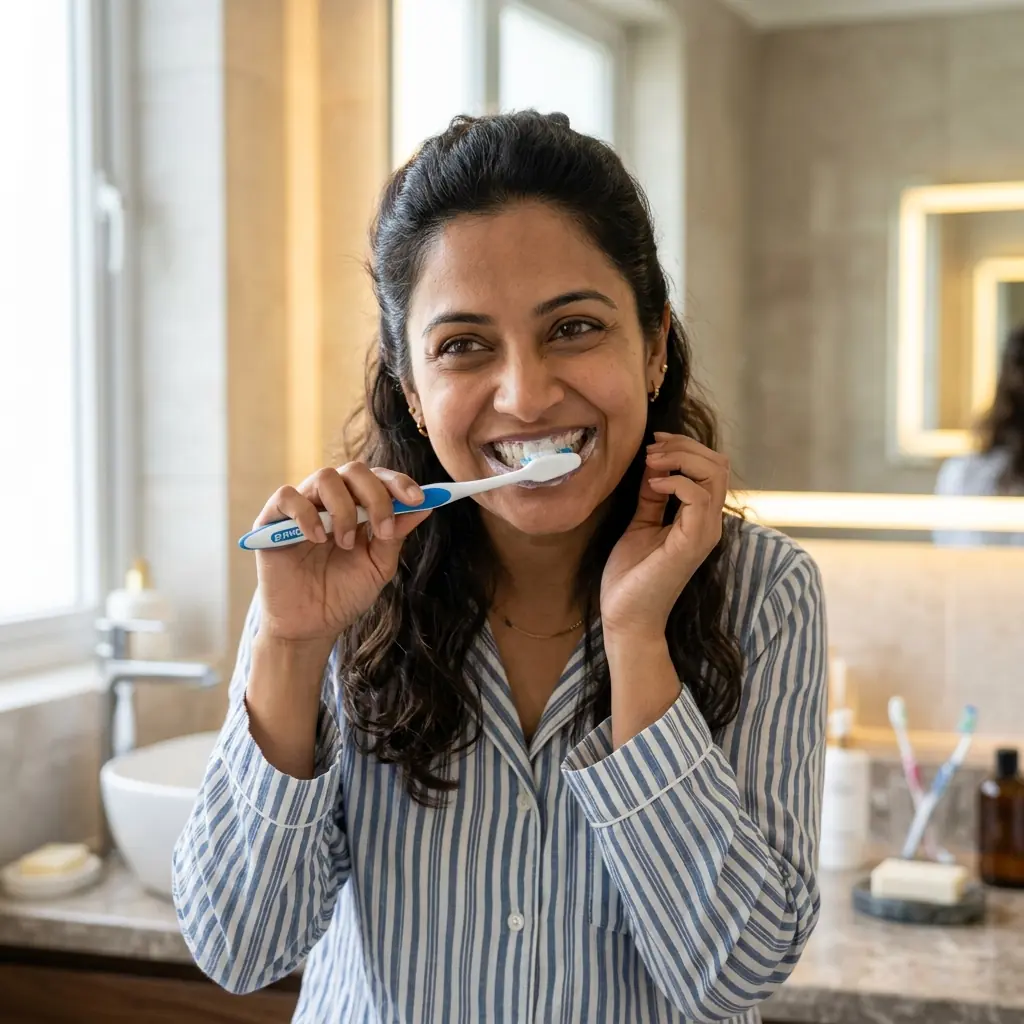
Most adults brush for an average of 45 seconds. The recommended time is two full minutes, twice a day. But beyond duration, technique is critical — and most people have never been formally taught how to brush correctly.
The modified Bass technique is the method most dentists recommend for adults. Here is how it works:
- Hold your toothbrush at a 45-degree angle to the gum line, so the bristles point towards the gums (not parallel to the teeth).
- Use small, gentle circular or vibrating motions — not horizontal scrubbing. Aggressive scrubbing causes enamel abrasion and gum recession over time.
- Brush the outer surfaces, inner surfaces, and chewing surfaces of all teeth systematically — do not rush through any section.
- Tilt the brush vertically to clean the inner surfaces of the front teeth.
- Brush your tongue: it harbours bacteria that recolonise tooth surfaces quickly.
Electric toothbrushes consistently outperform manual brushes in clinical studies, reducing plaque by up to 21% more and gingivitis by up to 11% more. If you are open to the investment, a rotating-oscillating electric brush is worth it.
One important caution: do not brush immediately after eating or drinking acidic foods (citrus, tamarind, coffee). Acid temporarily softens enamel, and brushing in that window can abrade it. Wait at least 30 minutes.
Floss Daily — No Substitutes
Approximately 35% of each tooth's surface lies between teeth, in areas a toothbrush can never reach. This is precisely where many cavities and gum problems originate. Flossing is the only effective way to clean these surfaces.
The correct technique:
- Use about 45 cm (18 inches) of floss, winding most of it around your middle fingers to leave fresh sections for each tooth.
- Hold the floss taut and gently guide it between teeth using a zig-zag motion — never snap it into the gums.
- Curve the floss around each tooth in a "C" shape and slide it gently under the gum line, then move it up and down against the tooth surface.
- Use a fresh section of floss for each tooth gap.
If traditional floss is difficult to manage, floss picks, interdental brushes, or a water flosser are excellent alternatives. Water flossers are particularly useful for people with braces, bridges, or implants. The key is consistency — once a day, every day, is better than occasionally perfect flossing sessions.
Use Fluoride Toothpaste and Consider a Fluoride Mouthwash
Fluoride is the single most evidence-backed ingredient in cavity prevention. It works through multiple mechanisms: it inhibits bacterial acid production, it promotes remineralisation of early enamel lesions, and it makes remineralised enamel more resistant to future acid attacks.
For adults, the recommended fluoride concentration in toothpaste is 1000-1500 ppm (parts per million). Most standard toothpastes in India fall within this range — check the label. "Natural" or herbal toothpastes often contain little to no fluoride and do not provide the same protective effect.
An important technique detail: do not rinse with water immediately after brushing. Spitting out excess toothpaste and leaving a thin residual film on your teeth allows the fluoride to continue working. This single change can significantly improve cavity protection.
For patients at higher cavity risk — those with a history of frequent decay, dry mouth, or who consume a lot of sugar — a fluoride mouthwash used at a different time of day from brushing (e.g., after lunch) provides an additional protective layer.
Watch Your Diet — Sugars, Acids, and the Timing of Snacks
The relationship between diet and cavities is more nuanced than simply "sugar causes cavities." What matters as much as how much sugar you eat is how often you eat it. Every time you consume fermentable carbohydrates — sugar, rice, bread, biscuits — the bacteria in your mouth produce acids for about 20-40 minutes afterward. The more frequently you eat, the more total time your teeth are under acid attack.
"A patient who drinks three cups of chai with two sugars throughout the day is exposing their teeth to acid attacks almost continuously. I often see more decay in frequent tea and coffee drinkers than in people who eat large amounts of sweets only during meals. It is not just what you eat — it is the pattern."
— Dr. Indumathiy R, Dental Surgeon, Grace Dental Care
Practical dietary tips for Indian eating habits:
- Chai and coffee: Try to consume tea and coffee with meals rather than sipping throughout the day. If you do drink them between meals, rinse your mouth with water afterwards.
- Sweets and mithai: Having sweets as part of a meal is better for teeth than eating them as standalone snacks throughout the day.
- Rice and rotis: Refined carbohydrates like white rice and maida are fermentable by oral bacteria. Rinsing or brushing after meals helps.
- Acidic foods: Tamarind, lime (nimbu), citrus juices, and pickles are highly acidic. Enjoy them with meals and rinse with water afterward.
- Cheese and dairy: Cheese, milk, and curd are actually protective — they neutralise acids, provide calcium, and some studies show cheese specifically raises oral pH. Including dairy with meals is beneficial.
- Crunchy vegetables: Carrots, cucumber, and other raw vegetables stimulate saliva flow and act as a natural tooth scrub.
Stay Well Hydrated — Saliva Is Your Best Defence
Saliva is underrated as a protective agent. It performs multiple anti-cavity functions simultaneously: it buffers and neutralises acids, delivers calcium and phosphate ions to remineralise enamel, mechanically washes food and bacteria from tooth surfaces, and contains antibacterial proteins such as lysozyme and lactoferrin.
Adequate hydration is essential for adequate saliva production. A dry mouth — whether from dehydration, certain medications (antihistamines, antidepressants, blood pressure medications), mouth breathing, or medical conditions — dramatically increases cavity risk. Patients with clinically diagnosed dry mouth (xerostomia) can develop cavities extremely rapidly.
Practical tips to support saliva production:
- Drink at least 2-3 litres of water daily. Keep a water bottle at your desk.
- Chew sugar-free gum containing xylitol after meals. Xylitol not only stimulates saliva flow but actively inhibits S. mutans bacteria and reduces their acid output — it is one of the few non-fluoride ingredients with strong cavity-prevention evidence.
- If you are a mouth breather, discuss this with your dentist — the drying effect on the front teeth is considerable, and there are solutions including saliva substitutes.
- Avoid excessive alcohol and caffeine, which have dehydrating effects on saliva production.
Dental Sealants — Especially for Children, but Adults Benefit Too
The chewing surfaces of the back teeth (molars and premolars) are covered in deep pits and fissures that are extremely difficult to clean with a toothbrush. These narrow grooves are a primary site of cavity development — even in patients with otherwise excellent oral hygiene. Toothbrush bristles are simply too wide to reach inside them effectively.
Dental sealants are thin plastic coatings bonded to these chewing surfaces, physically sealing out bacteria and food debris. The procedure is quick, painless, and does not require any drilling or local anaesthesia. Evidence from decades of clinical studies shows that sealants reduce cavity risk in treated surfaces by up to 80%.
Sealants are most commonly recommended for children as soon as permanent molars erupt (typically around ages 6 and 12), because the risk period is highest when teeth first emerge and the enamel is still maturing. However, cavity-prone adults can also benefit significantly from sealants on surfaces that have not yet developed decay.
At Grace Dental Care, we routinely assess whether sealants are appropriate for both children and adults as part of our preventive care —programme.
Get Professional Cleanings Every 6 Months — Here Is Why
Home oral hygiene, no matter how meticulous, cannot do everything. Over time, plaque in areas that are consistently missed hardens into calculus (tartar) — a mineralised deposit that cannot be removed by brushing or flossing. Calculus creates a rough surface that attracts more plaque and bacteria, accelerating both cavity development and gum disease. Once calculus forms, only a professional ultrasonic scaling can remove it.
Beyond scaling, professional check-ups serve critical functions that cannot be replicated at home:
- Early cavity detection: Cavities caught at the white-spot or early enamel stage can often be remineralised with fluoride treatment — no drilling required. Cavities caught late require root canals or extractions. The difference between an affordable preventive fluoride application and a complex root canal treatment is often just six months.
- Gum disease monitoring: Early gum disease (gingivitis) is reversible. Left undetected, it progresses to periodontitis, which can destroy the bone supporting your teeth. Regular check-ups catch and reverse this process early.
- Oral cancer screening: Professional check-ups include a soft tissue examination. Oral cancer is significantly more common in India than globally due to tobacco and betel nut use, and early detection is life-saving.
- Personalised risk assessment: Your cavity risk changes over time based on your diet, medications, health status, and oral hygiene. Your dentist adjusts recommendations accordingly — a static routine is rarely an optimal routine.
The "every 6 months" guideline is appropriate for most adults. High-risk patients — those with a history of frequent decay, gum disease, dry mouth, or diabetes — may benefit from quarterly visits. Children's check-up frequency is guided by their individual risk profile.
A Word on Indian Dietary Patterns Specifically
Indian cuisine presents some specific challenges and opportunities for oral health. The heavy use of spices like turmeric (which has antimicrobial properties), crunchy vegetables in salads and sides, and the cultural importance of dal and legumes (which are protein-rich and less cariogenic than refined carbs) are genuinely beneficial. The challenges lie in the frequency of chai consumption, the widespread use of refined carbohydrates like maida, the prevalence of sweet mithai at celebrations, and — critically — the extremely common habit of supari and betel leaf use, which massively increases oral cancer and gum disease risk.
If you chew tobacco, pan, or supari, please discuss cessation support with us. This is one lifestyle change that has an outsized impact on your oral health.
Putting It All Together
Cavity prevention is not complicated in principle, but it requires consistency and attention to detail. The seven strategies above — correct brushing technique, daily flossing, fluoride use, smart dietary habits, hydration, sealants where appropriate, and regular professional care — work synergistically. No single habit is sufficient on its own; the combination is what delivers genuinely cavity-resistant teeth over a lifetime.
If you have not been to the dentist in more than a year, now is the right time to book a check-up and cleaning. Many of our patients are surprised to find that what they thought was a "small ache" or "just sensitivity" has been a cavity quietly progressing. Catching it now is almost always faster, simpler, and cheaper than waiting.
At Grace Dental Care, our preventive care consultations include a full oral examination, professional scaling, and a personalised home care plan. We are here to help you keep your natural teeth healthy for a lifetime.